
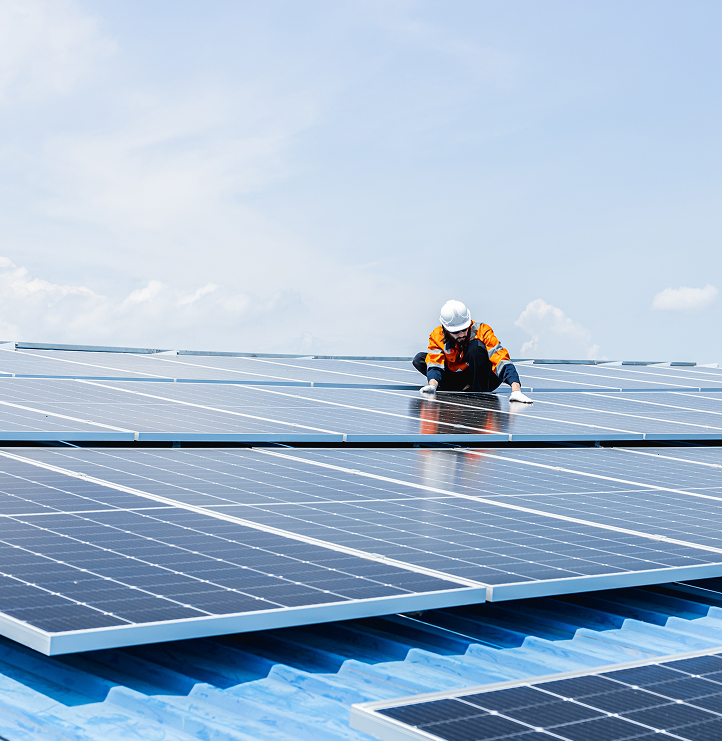
A Production Unit for Self-Consumption is a system for producing electricity using photovoltaic panels to power a consumption facility and thus reduce the consumption of energy from the public electricity grid, generating an economic and environmental benefit.
If there is a surplus of production, this surplus energy may be sold by concluding a contract with an energy supplier.

Autonomy

Savings

Sustainable

Intelligent

Carbon Avoided
Reduction of electricity bill

By producing part or all of the energy consumed, the amount of energy purchased from the public electricity grid is reduced.
Up to 100% self-consumption can be achieved, depending on the size of the installation.
Self-sufficiency and energy independence.
Reduces dependence on market electricity price fluctuations
Increases resilience in energy crisis situations.
Environmental Sustainability
Reduced carbon footprint by using of solar energy as a renewable source.
Direct contribution to the objectives of energy transition and carbon neutrality.
Taking advantage of incentives and support
Possibility of access to state incentives and EU funds for the installation of energy self-consumption systems.
Exemption from some fees or simplification of licensing processes, depending on the installed power.
Possibility of selling the surplus
Under certain conditions, it is possible to sell the surplus energy to the grid, generating additional revenue.
Flexibility in installation
It can be scaled according to the user’s consumption.
Installation possible on roofs, facades, land or specific structures (such as carports).